Pressure Canner vs Water Bath Canner: Which Do You Actually Need?
 By Wes Alder ·
Published October 14, 2026 · Last updated October 14, 2026
By Wes Alder ·
Published October 14, 2026 · Last updated October 14, 2026
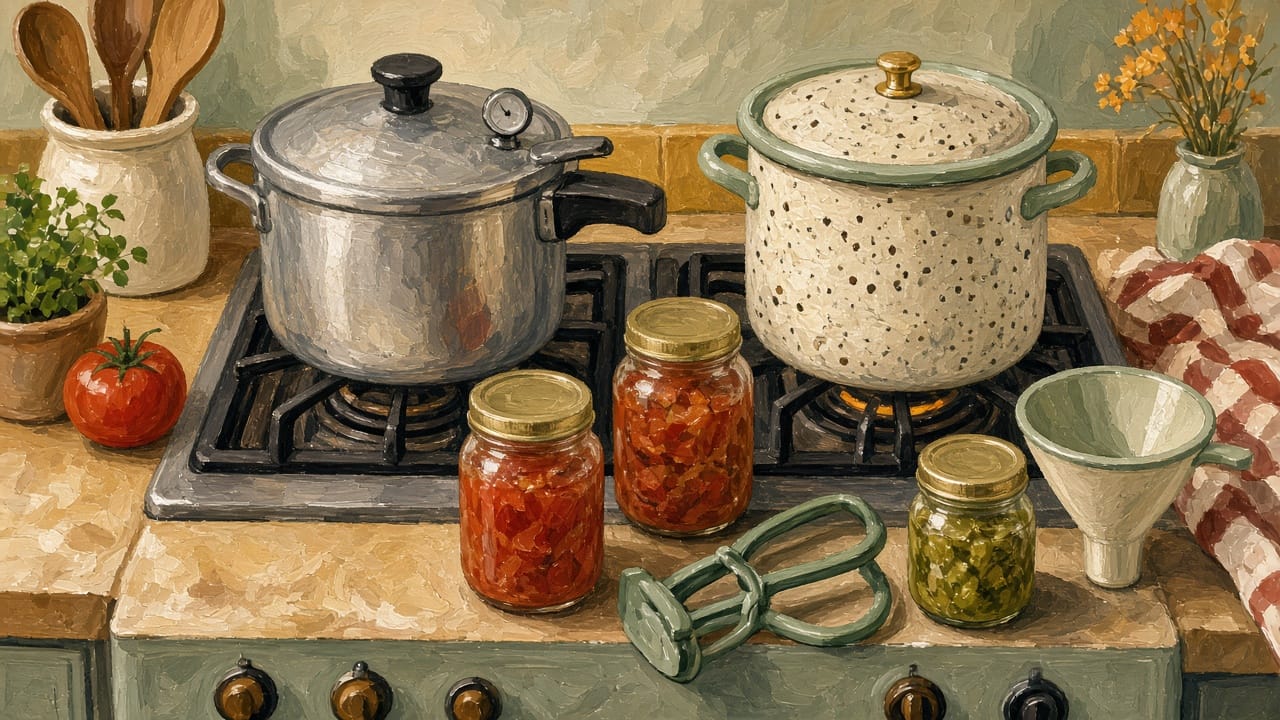
The food you want to can decides which canner you need. It’s a safety question, not a preference. This guide covers what each canner can safely process and what to look for when you buy, based on USDA and National Center for Home Food Preservation (NCHFP) guidance.
Quick answer: which canner do you need?
- Only high-acid foods (jam, jelly, most fruit, pickles, relish): a boiling-water canner is enough.
- Any low-acid food (plain vegetables, meat, poultry, seafood, soups, stock): a pressure canner is the only recommended method.
- Tomatoes: either canner, with added acid and a tested recipe.
My picks
I haven't tried these canners myself. The picks are based on the makers' specs and NCHFP guidance. See What to buy for my criteria, and Best Pressure Canners for Beginners for the details.
Presto 23-Quart Pressure Canner (01781), or the 01784 on induction. 7 quarts, dial gauge. I haven't used this one.
See Presto's page for the 01781
See Presto's page for the 01784
Presto 16-Quart Pressure Canner (01755). Holds 7 quarts, but see the catch in my full picks. I haven't used this one.
All American 921 (21.5-quart). Weighted gauge, no gasket, holds 7 quarts. I haven't used this one.
The "See ... page" links go to the maker's own site and are not affiliate links. Price buttons are affiliate links: I may earn a commission at no extra cost to you.
Why you can trust this (and where I'm coming from)
I own a boiling-water canner, and that's what I use for tomatoes, salsa, pickles, jams and jellies, in half-pint and pint jars. I've used a pressure canner in the past, but I don't own one now. One lesson from my first batches: tighten bands fingertip-tight, not too loose and not too tight, and fill jars properly.
Safety and procedure details below come from the USDA/NCHFP sources at the end. I'm a home canner, not a food-safety professional.
What can each canner safely process?
| Boiling-water canner (“water bath”) | Pressure canner | |
|---|---|---|
| Safe for high-acid foods (pH 4.6 or lower): jams, jellies, most fruit, pickles, relishes | Yes. The recommended choice, and faster | Allowed, but NCHFP recommends boiling water because it’s faster |
| Safe for low-acid foods (above pH 4.6): plain vegetables, meat, poultry, seafood, soups, stock | No. Real risk of botulism | Yes. The only recommended method |
| Tomatoes and tomato products | Yes, with added acid and a tested recipe | Yes, with added acid and a tested recipe |
| Highest temperature reached | About 212°F at sea level | 240°F or higher at the right pressure |
| Typical total time per load | About 25–60 minutes for most acid foods | About 55–100 minutes (heating, venting, processing, cooling) |
| Typical use | Jam, pickles, peaches, acidified tomatoes | Green beans, carrots, corn, stock, meat |
| NCHFP-cited cost | Roughly $15–$35 (check current prices) | $100–$150 or more (check current prices) |
Atmospheric steam canners are a third option for high-acid foods only, with research-tested recipes and total times of 45 minutes or less (altitude adjustments included), per NCHFP and university researchers.
Why acidity decides which canner you need
The risk is botulism. Clostridium botulinum spores survive boiling and, in a sealed, low-acid, oxygen-free jar, can produce a toxin. The USDA’s Complete Guide to Home Canning warns that even a taste can be fatal, and that using a boiling-water canner for low-acid foods “poses a real risk of botulism poisoning.”
Acid holds the bacterium back. Foods at pH 4.6 or lower are high-acid (most fruits, jams, properly pickled foods). Foods above 4.6 are low-acid (plain vegetables, meats, poultry, seafood).
Low-acid foods need more heat than boiling water provides. A pressure canner reaches 240°F or higher when run at the correct pressure for the correct time. At sea level, NCHFP notes, 10.5 pounds of gauge pressure gives 240°F. The temperature, not the pressure itself, destroys the spores.
Boiling-water canners: simple, cheap, limited
A boiling-water canner is a deep pot with a fitted lid and a rack. NCHFP says a large stockpot with a secure lid and rack works too, if it keeps at least 1 inch of briskly boiling water over the jar tops. Use a tested recipe, start timing only at a full rolling boil, restart the timer if the boil stops, and use the time for your elevation.
Gear to look at: a basic boiling-water canner with rack. I use a boiling-water canner myself, but I’m not recommending a specific model here.
Pressure canners: more expensive, more capable
A pressure canner is a heavy, sealed pot with a locking lid, rack, vent port, safety fuse and a way to read or regulate pressure.
Dial gauge vs weighted gauge
- Dial-gauge canners show pressure on a dial. Have it tested before each canning season, or after a drop or knock. NCHFP says to replace a gauge that’s off by more than 2 pounds. Many county Cooperative Extension offices can test certain gauges, or contact the maker.
- Weighted-gauge canners use a weight that rocks or jiggles. They don’t need gauge testing. Above 1,000 feet elevation they must run at 10 PSI instead of 5, or 15 instead of 10, because they can’t adjust as finely.
Size, and what not to buy
NCHFP recommends a canner that holds at least four quart jars standing upright. Small pressure saucepans are not recommended. NCHFP also doesn’t support USDA canning processes in electric multi-cookers, including those with a “canning” button, because the processes weren’t tested for them.
Categories to compare: weighted-gauge pressure canners and dial-gauge pressure canners. My research-based picks, with specs from the makers, are in Best Pressure Canners for Beginners. I haven’t used those models myself.
Using a pressure canner correctly
- Vent the canner for 10 minutes before adding the weight or closing the petcock. Trapped air lowers the temperature and can cause underprocessing.
- Start timing only when the correct pressure is reached. If pressure drops below it, restore it and restart the timing from the beginning.
- Don’t force-cool the canner. Let it depressurize on its own.
- Check the gasket and vent ports each season, and do a water practice run first.
This isn’t a full how-to; follow your canner’s instructions.
Can you can tomatoes in either canner?
Yes, but tomatoes trip up beginners. Some varieties can be above pH 4.6, so tested recipes require added acid in either canner. Per NCHFP, add to each jar before filling:
| Acid | Per pint | Per quart |
|---|---|---|
| Bottled lemon (or lime) juice | 1 tablespoon | 2 tablespoons |
| Citric acid | ¼ teaspoon | ½ teaspoon |
| Vinegar, 5% acidity | 2 tablespoons | 4 tablespoons |
Use bottled juice labeled “from concentrate.” NCHFP says fresh-squeezed and “not from concentrate” juice don’t carry a guaranteed acidity level, so they aren’t safe substitutes. Vinegar may change the flavor. Bottled lemon juice or citric acid is cheap insurance.
What to buy: decision criteria
- Match the canner to your food list. High-acid only: boiling-water canner. Any low-acid food: pressure canner.
- Check capacity. NCHFP recommends at least four quart jars upright. Bigger canners fit more per load; confirm capacity in the maker’s specs.
- Pick a gauge you’ll maintain. Weighted gauges need no testing but run at higher pressures at altitude. Dial gauges need yearly testing.
- Confirm it’s a true canner. Skip small pressure saucepans and multi-cookers.
- Check instructions and parts. Gaskets, vent pipes and gauges should be easy to replace.
- Set a budget. NCHFP’s cited price ranges are in the table; check current prices. Freezing and dehydrating need neither canner.
- Add basic tools: jar lifter, funnel, bubble remover, lid wand, headspace tool. See a canning rack and tool kit. Of these, I use a jar lifter and a wide-mouth funnel every time, plus a food mill or strainer for tomatoes. I don’t regularly use a bubble remover or lid wand.
Common canning-equipment mistakes to avoid
- Canning plain vegetables or meat in a boiling-water canner. This is the dangerous one.
- Using untested recipes or changing times. Use USDA/NCHFP-tested recipes; never shorten or “adjust” processing times.
- Ignoring altitude. Time (boiling water) and pressure (pressure canning) both depend on elevation. Check yours on NCHFP’s “Find Your Elevation” page.
- Skipping the dial-gauge test or the 10-minute vent. Both can mean underprocessing.
- Taste-testing doubtful jars. Even a taste can be fatal. Follow NCHFP’s spoiled-food guidance instead.
Frequently asked questions
Can I use a pressure canner for high-acid foods?
Yes, but NCHFP recommends boiling-water canners for them because they’re faster. The reverse is never okay: don’t use a boiling-water canner for low-acid food.
Is an Instant Pot a pressure canner?
No. NCHFP doesn’t support USDA canning processes in electric multi-cookers, even with a canning button.
Do I need to test my dial gauge every year?
Yes: before each canning season, or after a drop or bump. Replace a gauge that’s off by more than 2 pounds.
Can I can tomatoes in a water bath canner?
Yes, with a tested recipe and added acid, using the correct time for your jar size and elevation.
Can I can green beans in a water bath canner?
No. Green beans are low-acid. A pressure canner is the only recommended method.
Do I need both a water bath canner and a pressure canner?
Not necessarily. High-acid foods only: a boiling-water canner is enough. Any low-acid food: you need a pressure canner, which can also process high-acid foods.
Where do I find safe processing times?
In the USDA Complete Guide to Home Canning and on the NCHFP site, for your food, jar size and elevation.
The bottom line
High-acid foods need only a boiling-water canner. Low-acid foods like green beans, carrots or stock need a pressure canner, the only recommended method. Either way, follow current tested procedures exactly. If you’re unsure, start with a boiling-water canner and add a pressure canner when you’re ready for garden vegetables.
Last reviewed against the sources below on October 17, 2026. Prices and product availability change; this page will be updated.
Keep reading
- Best Pressure Canners for Beginners (Honest Picks)
- Canning Supplies Starter Kit: What You Need and What to Skip
- Best Tomatoes to Grow for Canning in Small Beds
Sources
- NCHFP, NewsFlash on bottled lemon juice from concentrate.
- National Center for Home Food Preservation (NCHFP), How to Use Boiling Water and Pressure Canners (adapted from USDA’s Complete Guide to Home Canning).
- NCHFP / USDA, Home Canning, Introduction (Complete Guide to Home Canning, rev. 2015).
- NCHFP, Tomato acidification directions and Selecting, Preparing, and Canning Tomatoes (Guide 3).
- NCHFP, Pop Quiz: What Time Is It? (dial-gauge testing, canner size) and Plan to can so your summer won’t be a bummer (canner types, typical costs).
- NCHFP, Can I Can in a Multi-Cooker?
- NCHFP, National Center Burning Issue: Using Atmospheric Steam Canners.
- NCHFP, Selecting the Correct Processing Time.